28 July 2026 · 2 min read
Framing pastel properly
Pastel is pure pigment with nothing added, which is why it lasts. It is also why it needs glass, a spacer and the right kind of light.
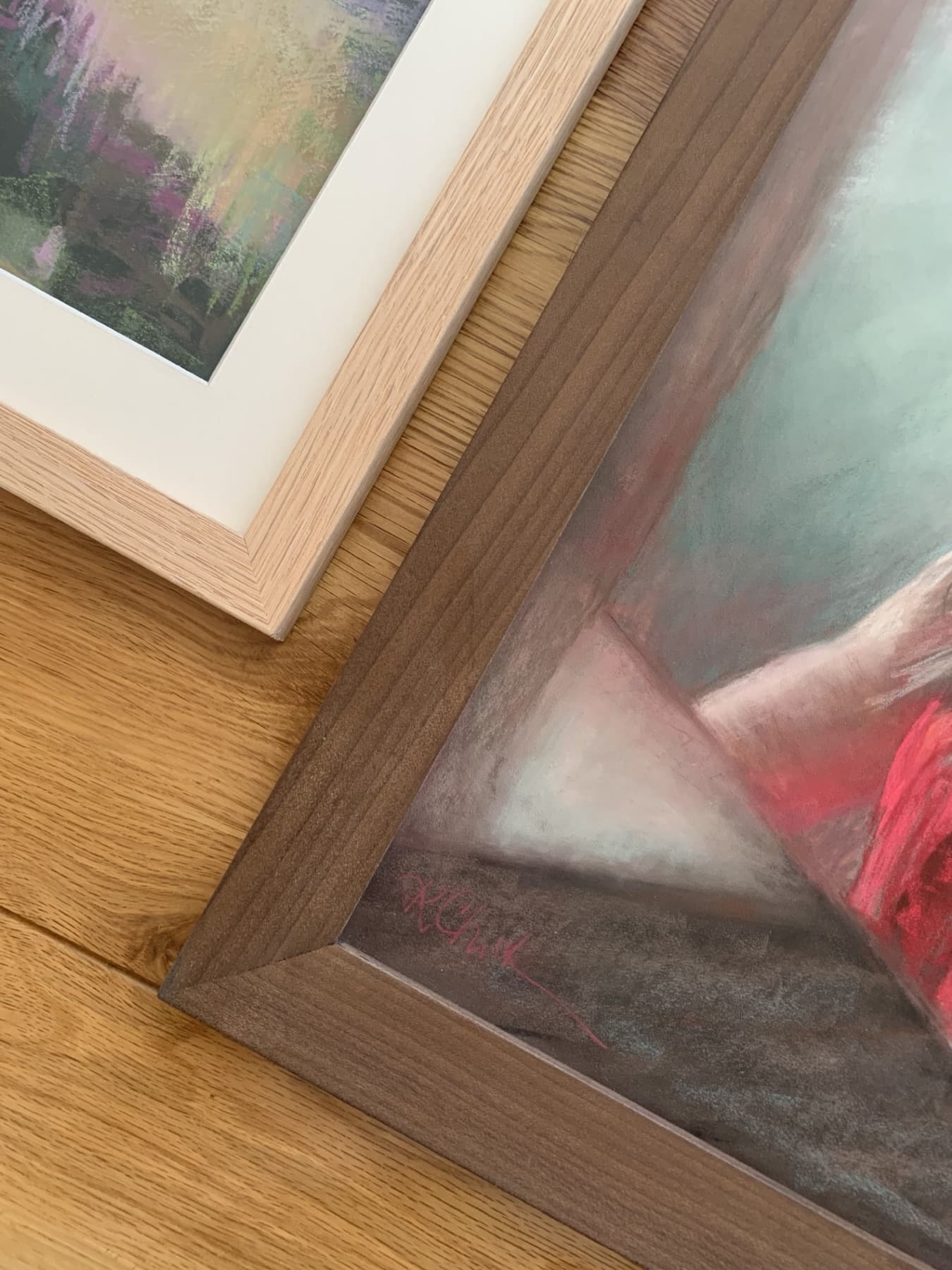
Pastel is pure pigment, with no solvents or mediums added. This means the painting or drawing is very stable and is the reason why pastel paintings from the 17th Century are wonderfully preserved in museums today.
However, before a painting can be hung in its forever home, it needs to be protected by framing behind glass.
While fixative products exist, most pastel artists may use these during the painting process rather than on the finished work. This is because the luminous velvety effect that the tiny pure pigment particles create can be affected by fixatives. Fixatives either dissolve the pigment particles into the paper, or coat the pigment particles with a polymer layer. In both cases, the lighter value pigments can appear darker and the texture and vibrancy of the painting can change.
If specially designed pastel paper is used for a work, the ‘tooth’ of the paper serves to hold the pigment. However, anything brushing up against the surface of the painting can damage the work by removing pigment from the surface. For this reason, a pastel work needs glass.
What to insist on
A clear spacer or deep mat. It is recommended, especially in humid climates, that the pigment does not touch the glass. Having a spacer or deep mat allows for any small amounts of loose pastel dust to fall below the edge of the mat or frame where it can remain out of sight. Pastel paintings can be framed with or without a mat, depending on the aesthetic choice of the artist or collector.
Anti-reflective and UV protective glass are essential for any original artwork. This minimises annoying reflections, showcasing the artwork at its best. Importantly, it also ensures the pigments will not fade over time. Various grades of glass are available from 70% UV protection to 99% UV protection in museum grade glass, depending on your needs and budget. Regardless, it is important to never hang any artwork (in any medium) in direct sunlight.
Choose a frame colour that complements the artwork, but doesn’t overpower it. This can be a very personal choice, but try different framing options up against the artwork to see the impact of the frame on the overall look.
Think of framing as protection of your investment, ensuring a beautiful artwork can be enjoyed and treasured by your family for many generations to come.